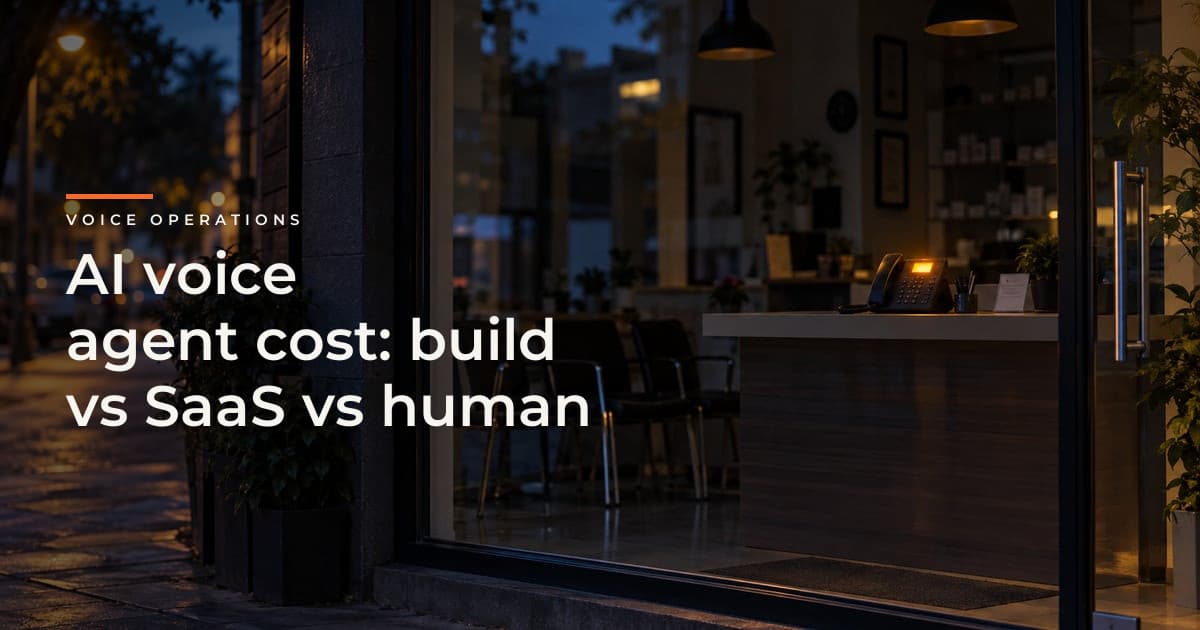

There is a specific kind of loss most Indian D2C founders never see on a dashboard. It does not show up as a canceled order or a refund. It shows up as a phone that rang once, went unanswered, and never rang again from that number.
Across 85 small businesses studied over a 30-day window, 411 Locals found that 62 percent of inbound calls went unanswered - roughly 38 percent went to voicemail and 24 percent got no response at all. And of the callers who reached no one on the first try, 85 percent never called back, while about 62 percent went straight to a competitor. The vast majority - close to 80 percent according to BrightLocal's 2025 local consumer survey - refuse to leave a voicemail at all. They call the next business on the list.
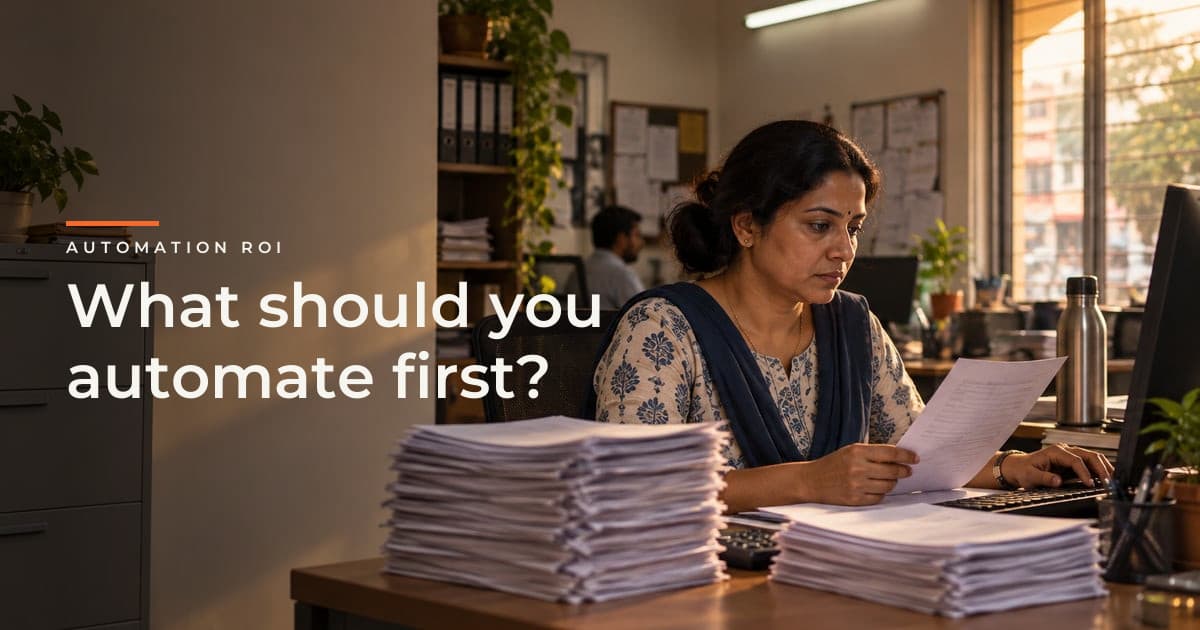
For an Indian D2C brand doing 5,000 to 50,000 orders a month, that is not a customer-service issue. It is a revenue leak the P&L cannot see.
What actually happens when a customer calls your D2C brand?
Quick Answer: Three things dominate D2C inbound calls: WISMO (where-is-my-order), COD confirmations that a customer wants to re-verify, and pre-purchase questions from cart abandoners. Global data pegs WISMO at 30-50 percent of all e-commerce support volume; for Indian brands with COD-heavy orders and Tier 2/3 delivery, that number skews higher. Every unanswered call in these categories is either a lost sale, a canceled COD, or a customer talking themselves out of the transaction.
The pattern most founders miss is that these calls are predictable. They cluster after dispatch notifications go out, they spike when the courier misses a scheduled delivery window, they surge during and after a marketing campaign. This is the honest reason your ops team feels overwhelmed - the volume is not random, it is downstream of decisions your marketing and fulfillment stacks are making. And it arrives disproportionately outside 9-to-5.
CallRail's 2025 dataset of 18 million SMB calls puts 40 percent of business calls outside standard hours - 25 percent in the evening, 8 percent late night, 7 percent on weekends. For consumer-facing categories the skew is worse - restaurants at 42 percent after-hours, home services at 73 percent. Indian D2C brands selling to working professionals in Bangalore or Mumbai run into this hard - the calls arrive when the ops team has gone home.
What does a missed call actually cost a D2C business?
Quick Answer: Two costs stack. The direct cost is the specific transaction lost - a canceled COD order at ₹800 average value, a first-time buyer who never converts, a repeat customer who defects. The compound cost is the lifetime-value gap - Invoca's 2026 benchmarks put phone-lead conversion at 42 percent across industries, roughly 15-20 times higher than web form conversion. Every unanswered inbound is a call that would have converted if answered.
The math becomes uncomfortable at scale. If a D2C brand receives 200 inbound calls a month and answers 40 percent, that is 120 unanswered calls. If a third of those calls were transactional (roughly 40), and half would have converted or salvaged an at-risk order at an average value of ₹800, that is ₹16,000 a month, ₹1.92 lakh a year, in transactions the brand never saw.
That is a conservative model. It ignores the lifetime value gap. It ignores the reputation cost when the same customer WhatsApps your care handle 4 hours later and gets a slow reply because your team is dealing with 60 backed-up messages. It ignores the marketing spend on cost-per-order that gets diluted every time an eligible caller drops.
For most Indian D2C brands, the honest number is somewhere between three and five times the direct calculation. The reason it stays invisible is that nobody attributes a lost order to a missed call the day before.
What does a modern AI voice agent actually do in 2026?
Quick Answer: A properly configured AI voice agent answers within one ring, greets the caller in their language, understands natural conversation (not menu-driven speech), pulls context from your order system to answer WISMO or delivery-status questions, escalates or captures a callback when it can't handle a case, and logs every call for later review. Sub-500ms response latency, 90-plus percent transcription accuracy on Indian English and major regional languages, and integration with WhatsApp / SMS for post-call follow-through are baseline in 2026 - not premium features.
The specific capabilities that matter for Indian D2C are:
Vernacular language handling. Bolna, MyOperator, and Retell all offer Hindi, Tamil, Telugu, Bengali, Marathi and English with credible accuracy. Hinglish code-switching (the way real people actually speak) is still uneven - test with 20-30 real calls before going live.
Order lookup by phone number or order ID. The agent should not read a script - it should read your Shopify order state and answer the specific question. "Your order shipped yesterday, out for delivery tomorrow between 11am and 2pm, delivery partner is Delhivery, tracking code XYZ." No hold music, no transfer.
Live-transfer with context. When the caller needs a human, the agent hands off with a summary of what was already asked and answered. Nothing worse than repeating your story to the transferred agent.
Callback capture. If nobody is available, the agent takes a message with the caller's number, the reason for the call, and offers a callback slot. This alone recovers the majority of unanswered calls.
Compliance logs. Every call recorded with consent, transcripts available for review, DPDP-compliant data retention. For a business that will scale, this matters.
The trap most brands fall into is buying the tool and treating it as a phone menu replacement. The value shows up when the agent is integrated with the order system, not when it just answers.
AI voice agent vs answering service vs hiring - which one makes sense?
Quick Answer: For most Indian D2C brands doing 5,000+ orders a month, a hybrid AI-plus-human model wins on unit economics. A full-time receptionist in India runs ₹14,500-17,800 a month per Indeed and Glassdoor 2026 data - useful for judgement calls, unavailable outside hours, capped at one call at a time. Managed voice agents from Indian vendors like MyOperator, Bolna, or Exotel handle inbound and outbound at scale - covering after-hours, spikes, and vernacular languages that human agents may not. For US comparison, Ruby Receptionists charges $319-1,079 per month for 50-500 receptionist minutes; Indian answering services from Knowlarity or Servetel run ₹1,999-3,499 per agent per month for basic inbound.
The choice is not "AI or human." The choice is "which calls does the AI handle." The right cut for a growing D2C brand looks like this:
AI handles: order status, delivery tracking, COD confirmation, hours-of-operation, common product questions, callback capture after-hours.
Human handles: complaints, refund escalations, wholesale inquiries, PR calls, angry customers, anything the AI flags as low-confidence.
Because most call volume in D2C is transactional, this split can move 60-70 percent of inbound to AI without a customer noticing they weren't talking to a person. Your ops person is now dealing with 60 real conversations a day instead of 200 mostly-transactional ones.
What breaks when brands roll out voice agents badly?
Quick Answer: Three failure modes recur. The agent hallucinates order details because it isn't wired to the source system. The agent loops when it doesn't understand a question, frustrating the caller into hanging up. The agent escalates 90 percent of calls because the confidence thresholds are set too conservatively, so it becomes an expensive IVR. Each of these is a configuration problem, not a technology problem - and each is fixable with a monthly review of flagged transcripts.
The other quiet failure is treating voice as separate from your other channels. If the customer calls, gets an answer, then WhatsApps 4 hours later asking the same question, and the WhatsApp agent has no idea a call happened, you have not built ops - you have added a channel. The voice agent should update the same customer record every other channel reads from. This is why we treat voice as one input into an operational intelligence system, not a standalone tool.
The other trap is buying a vendor's default script and never touching it. Every business has 4-5 specific inbound call flows that account for 80 percent of volume. Configure the AI for THOSE flows first. Test with real transcripts. Update quarterly. Voice agents get worse without maintenance, not better.
What should you do next?
Run a two-week baseline before you buy anything. Turn on call recording on your existing number, count inbound volume, tag each call as (a) answered on first ring, (b) answered after 3+ rings, (c) missed, (d) transactional vs judgement. That data is your ROI model - not a vendor's stat sheet.
Then decide the scope. If you are under 100 inbound calls a month, the ROI is thin - buy a hosted answering service. If you are between 100 and 500 inbound with a Tier 2/3 customer base and after-hours volume, an AI voice agent covers the highest-cost calls (COD confirmations, WISMO, callbacks). Above 500 monthly inbound, or above 5,000 orders a month, voice becomes part of your ops stack - not a support add-on.
For brands running Shopify with meaningful ops complexity, the voice agent is one capability inside FlowCore, our AI operations platform - designed to keep voice, WhatsApp, order state, and support tickets in one decision layer so the customer never has to repeat themselves. If you want to talk through whether a voice agent fits your specific call mix, book a Technology Diagnostic - we'll look at your actual call data, not a demo.