Why most Shopify brands do not have a growth problem
Most Shopify brands do not actually have a traffic problem. They have an operations problem hiding inside a growth problem. Orders come in, but inventory visibility is weak. Campaigns generate clicks, but follow-up is delayed. Customer questions pile up, but support teams are still answering the same repetitive queries manually. The result is predictable: higher acquisition costs, slower response times, inconsistent customer experience, and margin leakage across the entire system.
This is where the next phase of Shopify growth is changing. It is no longer just about better ads, prettier storefronts, or another retention app. The real advantage is building a tighter operating layer behind the storefront so the business can respond faster, sell more efficiently, and scale without adding the same amount of manual effort.
At InovaBeing, this is the lens behind The Shopify Growth Series: growth is not just marketing performance. Growth is the compound result of acquisition, conversion, fulfillment, support, retention, and the systems that connect them.
The real bottleneck in Shopify growth
A lot of ecommerce operators focus on front-end metrics first: ROAS, CTR, CAC, conversion rate, AOV. Those metrics matter, but they only tell part of the story. What often hurts a Shopify business is what happens after the click.
Common issues look like this:
- Product discovery is decent, but customer questions slow down the purchase journey.
- Checkout works, but order status and post-purchase communication create support load.
- Inventory exists, but visibility across products, vendors, and operations is fragmented.
- Leads arrive from campaigns, WhatsApp, or calls, but follow-up is inconsistent.
- Teams use multiple apps, but there is no intelligence layer coordinating action.
This is why many brands experience growth in bursts rather than in a stable curve. The funnel expands, but the backend does not mature at the same speed.
The new growth stack for Shopify brands
For modern Shopify brands, the growth stack is evolving from a set of disconnected tools into a more intelligent operating system. Instead of asking only "How do we get more traffic?" strong operators are asking:
- How do we reduce manual work in support and operations?
- How do we respond to customers faster across voice, chat, and messaging?
- How do we improve conversion without forcing the team to do more repetitive work?
- How do we make post-purchase experience part of growth?
- How do we make our systems act, not just report?
That is where InovaBeing's approach becomes relevant. The opportunity is not just AI as a widget. It is AI as an operational layer across customer touchpoints and internal workflows.
What The Shopify Growth Series is really about
This series is built around one core idea: Shopify growth compounds when operations become intelligent.
That means looking at the business through connected layers:
1. Customer acquisition
Paid media, organic content, social, influencer traffic, search, and marketplace spillover all help bring people into the funnel. But traffic alone does not create growth if the downstream systems are slow or inconsistent.
2. Conversion
Conversion is shaped not only by copy, design, and offers, but also by trust, response speed, product clarity, and how quickly customer objections are resolved.
3. Operations
Operations decide whether growth is sustainable. Order accuracy, inventory coordination, vendor visibility, and process discipline all affect customer satisfaction and repeat purchase behavior.
4. Customer experience
Pre-purchase and post-purchase support now directly influence brand trust. Fast answers, proactive updates, and smooth escalation paths are no longer optional.
5. Retention
Retention improves when the entire journey feels reliable. Great support, fast updates, and relevant re-engagement often create more compounding value than constant acquisition spend.
Where AI fits into Shopify growth
AI should not be treated as a shiny add-on. For Shopify brands, AI becomes valuable when it removes delay, reduces repetitive work, and improves consistency.
A few practical areas where this matters:
- AI voice agents can answer common questions, route inquiries, and capture intent without making customers wait.
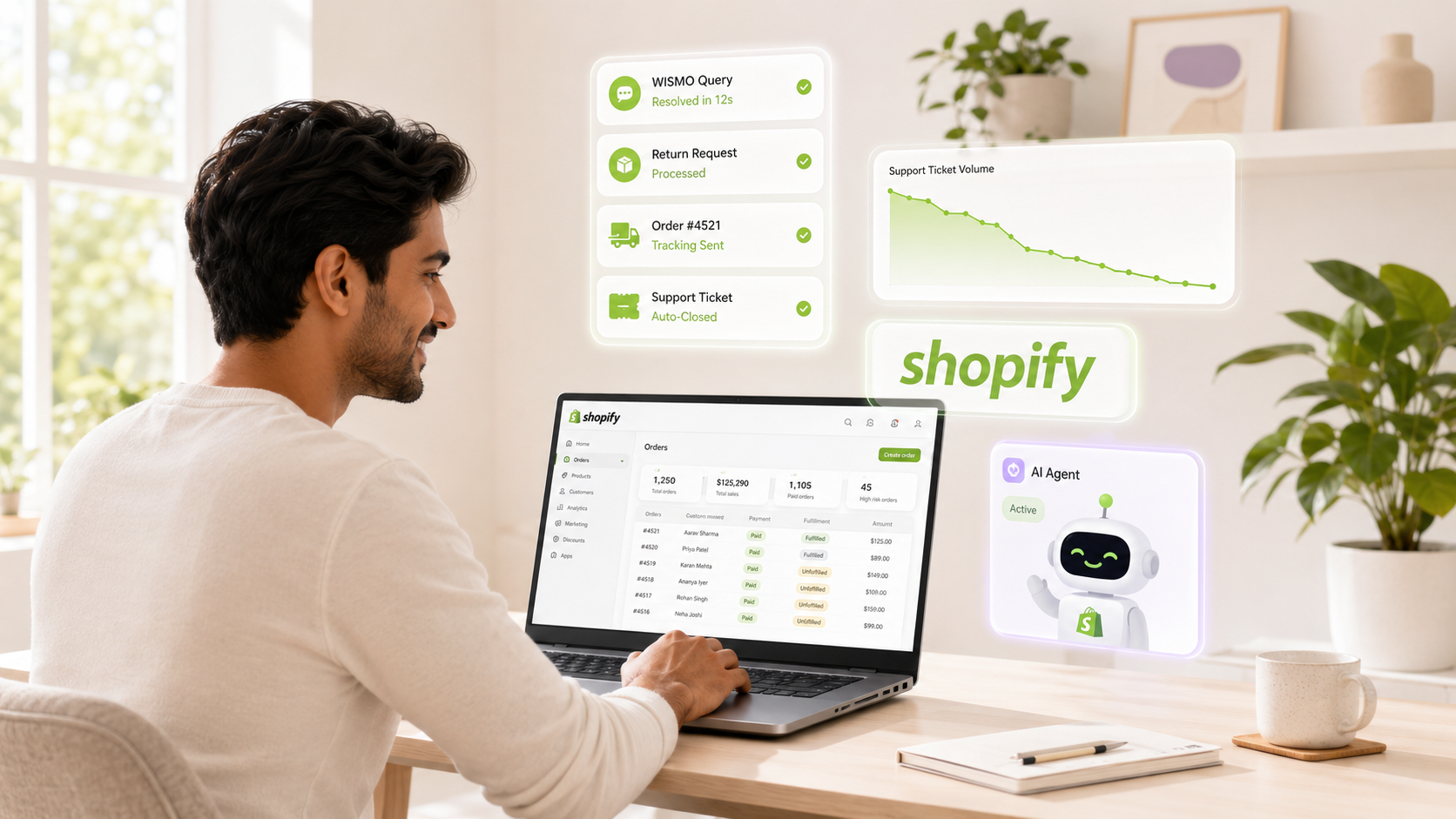
- AI support agents can handle repetitive order, shipping, and policy questions so human teams focus on edge cases.
- AI-driven workflows can trigger updates, coordinate actions, and reduce the lag between issue detection and response.
- Intelligent operational systems can surface exceptions before they become customer complaints.
This is the difference between "using AI" and building a smarter commerce operation.
How InovaBeing fits the Shopify growth journey
InovaBeing's strength is not just building automation for the sake of automation. It is designing systems that help businesses operate with more intelligence across support, workflow, and execution.
That aligns naturally with Shopify brands that are dealing with:
- High support load from repetitive customer questions.
- Order and inventory coordination issues.
- Fragmented apps and disconnected operational workflows.
- Slow follow-up on customer inquiries and leads.
- Growth that is limited by team bandwidth rather than demand.
For these businesses, the right setup is not more dashboarding alone. It is a combination of AI-powered customer interaction, workflow orchestration, and operational visibility.
Themes this series will explore
The Shopify Growth Series by InovaBeing can cover a wide range of practical growth topics, including:
- How AI voice reception can improve ecommerce customer response.
- How to reduce Shopify support load with intelligent agents.
- How order operations affect retention and repeat purchases.
- Why post-purchase experience is a hidden conversion lever.
- How operational intelligence becomes a growth moat for DTC and multi-vendor brands.
- How to connect Shopify, support, and backend systems into one decision layer.
- How growing brands can scale without linearly scaling headcount.
Each of these topics matters because Shopify growth is no longer a pure marketing game. It is now a coordination game.
A sharper point of view for ecommerce operators
The strongest brands in the next few years will not win only because they advertise better. They will win because they respond faster, coordinate better, reduce friction, and turn operations into an advantage.
That is the strategic position behind The Shopify Growth Series by InovaBeing. It is not a content series about hacks. It is a series about building a stronger growth engine by fixing the systems behind the storefront.
Closing thought
If a Shopify brand wants to grow profitably, it needs more than traffic and campaigns. It needs operational intelligence.
That is the real theme of this series: growth happens when customer experience, operations, and intelligent systems work together - not as separate tools, but as one connected engine.