There is a specific kind of operational pain that only shows up once a Shopify brand has scaled past the point of running from one warehouse with one fulfilment flow.
You have added locations. You have brought in a 3PL, maybe two. You have split inventory across regions to get closer to customers and cut last-mile costs. On paper, this is smart, mature infrastructure for a brand doing real volume.
But internally, something does not add up.
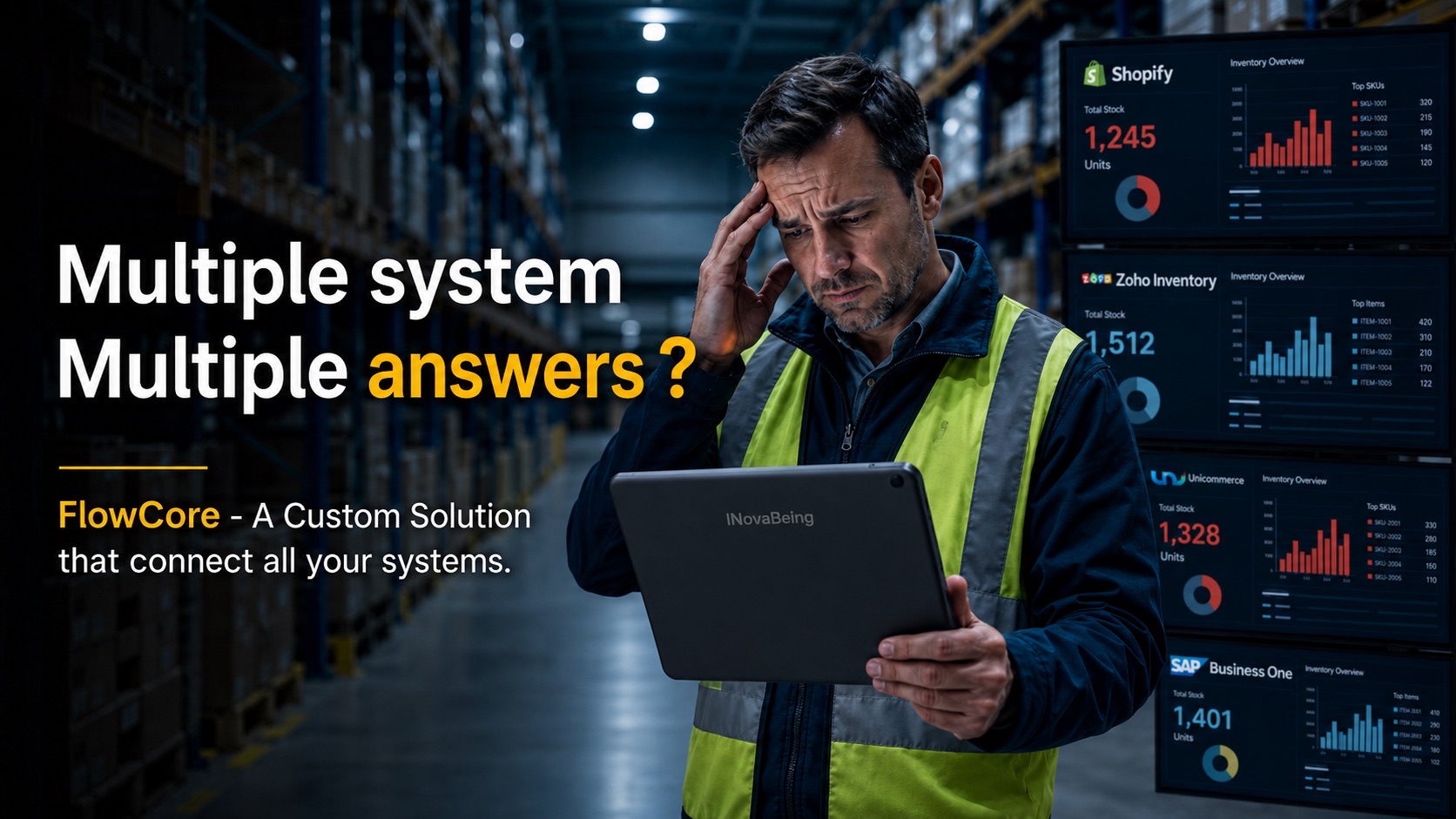
The 3PL portal shows one number. Shopify shows another. The ops team has a spreadsheet that shows a third. Nobody fully trusts any of them. Orders get routed based on whoever checked the sheet most recently, and SLA breaches, reships, and split shipments have quietly become a regular cost of doing business.
This is the multi-location ops problem - and at 5-20M ARR, it is one of the most expensive invisible drains on margin a Shopify brand can carry.
Why Multi-Location Creates a Data Trust Problem
When a brand runs from a single warehouse, inventory reality is simple. One location, one count, one source of truth. Shopify reflects it closely enough to make decisions.
The moment a second location enters the picture - a 3PL, a regional warehouse, a fulfilment partner - that simplicity breaks.
Each location has its own system:
- 3PLs run their own WMS portals with their own update frequencies and data formats.
- Shopify tracks location-level inventory but depends on those integrations being accurate and real-time.
- Internal warehouses often report via spreadsheet updates or manual syncs.
The result is that stock data across your fulfilment network is never fully in sync. There is always a lag. There is always a discrepancy. And the larger the order volume, the more that discrepancy costs you.
Industry guides on Shopify inventory management for multi-location brands are consistent on this point: fragmentation is not a technology failure - it is a structural reality of multi-node fulfilment that requires a centralised decisioning layer to manage, not just better integrations.
The Shadow Spreadsheet Problem
When teams cannot trust the systems, they build their own.
In almost every 5-20M ARR brand operating across multiple warehouses or 3PLs, there is a version of the same scene: a senior ops manager or fulfilment lead maintains a private spreadsheet - usually updated manually, partially out of date, and kept alive through institutional knowledge and sheer stubbornness.
This spreadsheet is the real operational source of truth. It is where routing decisions get made. It is what gets checked before committing to a ship date. It is what the team trusts when Shopify and the 3PL disagree.
This is not a failure of process. It is a rational response to a broken information environment.
The problem is what it costs:
- Decisions made from stale data produce wrong routing, missed SLAs, and stockouts on SKUs that show as available.
- When the person who owns the spreadsheet is unavailable, ops decisions stall or get made blind.
- Leadership sees "ops complexity" as a headcount and process problem, when the root cause is a missing data layer that nobody has formally addressed.
Shadow spreadsheets are a signal, not a solution. They tell you that your operational data environment has a trust problem that no amount of manual effort will permanently fix.
SLA Breaches, Split Shipments, and Reships: The Margin Drain Nobody Measures
The downstream costs of multi-location ops chaos show up in three specific, recurring ways. Each one is visible. None of them are typically traced back to their operational root cause.
SLA breaches. When routing decisions are made from fragmented or delayed stock data, orders get assigned to locations that cannot actually fulfil on time. The stock is "available" in the system, but physically allocated, on its way to another order, or miscounted. By the time the discrepancy surfaces, the SLA window has closed.
SLA breaches generate refund requests, support escalations, and negative reviews. But in most brands' reporting, they sit inside "customer service costs" or "ops overhead" - not traced back to the inventory routing decision that caused them.
Split shipments. When a single order cannot be fulfilled from one location, it splits across two or more fulfilment points. The customer receives multiple deliveries on different days with different tracking numbers and no clear explanation.
Split shipments cost money twice: once in the extra shipping cost, and once in the post-purchase confusion they create. Guides on Shopify fulfilment optimisation consistently flag split shipments as one of the highest-cost operational inefficiencies for multi-location brands - because the cost is paid on every affected order, silently, at scale.
Reships. Reships are the most expensive single-order outcome in multi-location ops. They happen when a fulfilment error - wrong item, damaged goods, misrouted order - requires a second shipment to correct.
At 5-20M ARR with meaningful order volume, even a small reship rate compounds into a significant monthly cost. And because reships are often handled at the support or ops level without formal attribution, they rarely appear as a line item that leadership can interrogate, reduce, and track over time.
What Leadership Sees vs. What Is Actually Happening
This is the part of the multi-location ops problem that makes it persist.
Founders and COOs at this stage typically have strong visibility into revenue, acquisition costs, and marketing performance. What they do not have is a clear operational picture of what is happening across their fulfilment network.
What leadership usually sees:
- Total fulfilment cost as a percentage of revenue
- Refund and return rates at a headline level
- Support ticket volume, broadly
What they do not see:
- Which 3PL or warehouse is generating the most SLA breaches
- What percentage of split shipments are caused by routing decisions vs. genuine inventory gaps
- How much of the monthly refund cost is operationally caused - wrong routing, late fulfilment, stock discrepancy - vs. customer-preference driven
- Which SKUs are consistently over-allocated at one location while understocked at another
Without that visibility, the problem gets managed as a cost to absorb rather than a system to fix. More ops hires are added. More manual checking is layered in. The shadow spreadsheet grows more elaborate. And the underlying structural issue - no single operational brain coordinating decisions across locations - stays in place.
We covered how this visibility gap shows up earlier in a brand's growth in The Invisible Ops Wall Every 1-5M ARR Shopify Brand Hits. At 5-20M ARR, the same gap has just become more expensive and harder to see.
Why Standard Shopify Multi-Location Logic Is Not Enough
Shopify has built-in multi-location support and a location priority system for order routing. For brands with simple setups - two locations, clean inventory, consistent SKU availability - this works reasonably well.
But at 5-20M ARR with 3PLs, regional warehouses, and meaningful SKU complexity, Shopify's native routing logic hits real limits:
- It cannot account for real-time 3PL capacity or processing backlogs.
- It does not surface exception queues - orders that are likely to breach SLA based on current stock and location state.
- It does not give ops a live view of which orders are at risk across the fulfilment network right now.
- It does not connect routing decisions to post-fulfilment outcomes so the brand can learn and improve routing rules over time.
Shopify is the commerce layer. It was not built to be the operational intelligence layer across a multi-node fulfilment network. At 5-20M ARR, that distinction matters enormously.
The Five Signs You Are Living This Problem
If you are running or advising a 5-20M ARR Shopify brand with multiple warehouses or 3PLs, here is a practical checklist:
- Your team maintains a spreadsheet or internal tracker that is more trusted than Shopify for routing decisions.
- SLA breaches and reships are a known recurring cost but have no clear root-cause tracking.
- Split shipments happen regularly and are accepted as normal rather than measured and reduced.
- Stock discrepancies between Shopify and your 3PL portal require manual reconciliation more than once a week.
- Leadership sees total fulfilment cost rising but cannot attribute it to specific operational failure points.
Three or more of these means the multi-location ops problem is already active and already costing you margin that is not showing up in a way you can act on.
What the Fix Actually Requires
The answer is not a better Shopify integration with your 3PL. Integrations alone do not solve the data trust problem - they just move the discrepancy from one system to another.
What the problem requires is a centralised operational intelligence layer: a system that sits across Shopify, your warehouses, and your 3PLs, holds the real order book, makes routing decisions from unified stock reality, and surfaces exception queues before SLAs breach rather than after.
That layer needs to do four things well:
- Aggregate inventory state across all locations in real time - not as a sync, but as a live operational view.
- Route orders based on actual fulfilment capability - capacity, proximity, stock accuracy - not just static location priority.
- Surface exceptions proactively - which orders are at SLA risk today, which SKUs are misallocated, which locations are building backlogs.
- Create accountability - connecting routing decisions to fulfilment outcomes so the brand can measure, trace, and improve operational performance over time.
We have written separately about the architecture that connects Shopify, backend systems, and support into a unified decision layer. This article is specifically about the fulfilment network problem that sits upstream of that architecture.
The Real Cost of Waiting
Multi-location ops chaos does not announce itself loudly. It accumulates.
Every split shipment is a small cost. Every SLA breach is a recoverable situation. Every reship is a one-off fix. Every shadow spreadsheet is just the team doing what they need to do to keep things moving.
But at 5-20M ARR with meaningful order volume, these small costs run at scale every single day. A 2% reship rate on 1,000 daily orders is 20 reships. A 5% SLA breach rate is 50 customers receiving a poor experience today alone. A shadow spreadsheet that is 48 hours stale is a routing system making decisions from data that no longer reflects reality.
The ops wall we described for 1-5M ARR brands is about fragility. The multi-location problem at 5-20M ARR is about silent margin erosion - costs that are real, recurring, and traceable, but are never traced because no system exists to connect the dots.
If you are running a 5-20M ARR Shopify brand and recognise the patterns above, the next move is operational visibility - not another integration. Book an AI Ops Audit - we will map the specific routing and exception failures that are draining margin today, and what a unified decision layer would change.